

Perfect pairings of Emilian wines and traditional dishes
In Emilia-Romagna, wine doesn’t simply accompany a meal: it is part of it. Every traditional dish is conceived with the perfect glass of wine in mind, because Emilian cuisine is rich, flavourful and often complex, and needs the right wine to achieve balance.
From the Food Valley to Romagna, the region offers a surprising variety of wines: Lambrusco, Pignoletto, Sangiovese, Gutturnio, Albana. Understanding the perfect pairings between Emilian wines and traditional dishes means truly immersing yourself in the region’s gastronomic culture.
Lambrusco and Emilian cuisine: a pairing that defines the region
If there is one wine that epitomises Emilia, it is Lambrusco. Sparkling, fresh and with good acidity, it is the natural companion to many traditional dishes.
Lambrusco and cured meats from the Food Valley
Parma ham, Culatello di Zibello, Salame Felino: the richness and savoury flavour of these cured meats find a perfect balance in Lambrusco. The bubbles cleanse the palate, whilst the acidity cuts through the richness.
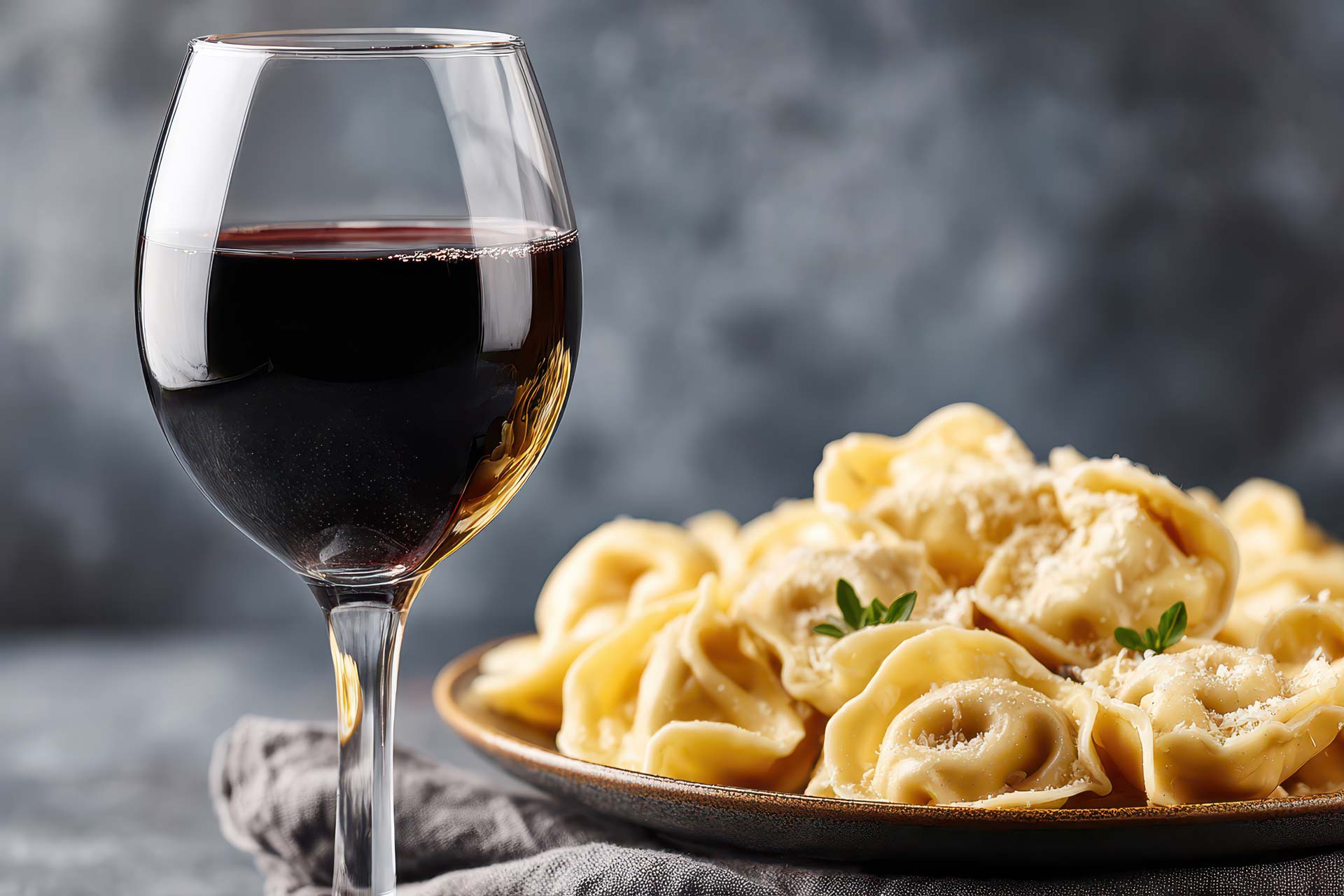
Lambrusco and tortellini
With tortellini in broth or with a light meat sauce, a dry Lambrusco that isn’t too tannic enhances the filling without overpowering it. It is a classic pairing, particularly in the Modena and Reggio Emilia regions.
Sangiovese from Romagna and full-bodied dishes
Moving eastwards, the star of the show becomes Sangiovese di Romagna. More robust, more structured, with pronounced tannins, it is perfect for hearty dishes.
Sangiovese and tagliatelle with ragù
Bolognese ragù, rich and flavourful, calls for a wine capable of holding its own against the dish’s structure. Sangiovese, with its acidity and aromas of red fruits, creates a harmonious balance.
Sangiovese and grilled meats
Grilled meats, roasts and game find a natural ally in Sangiovese. It is a typical pairing in the hills of Romagna and the Apennines.
Pignoletto and delicate dishes
Pignoletto dei Colli Bolognesi is a fresh, fragrant white wine with good acidity. It is ideal for dishes that are less structured but rich in flavour.
Pignoletto with tortellini in cream and ham sauce
In more delicate dishes, where creaminess takes centre stage, Pignoletto helps to balance the richness with its freshness.
Pignoletto and piadina romagnola
With piadina, squacquerone and prosciutto, a glass of Pignoletto makes the whole dish lighter and more harmonious.
Gutturnio and Piacenza cuisine
The Gutturnio dominates the Piacenza region; it is a wine made from Barbera and Croatina grapes. It can be sparkling or still, young or more full-bodied.
It is the perfect accompaniment to:
• Coppa piacentina DOP
• Pisarei e fasò
• Roasts and braised meats
The lively character of Gutturnio complements the region’s hearty, rustic cuisine.
Albana di Romagna and traditional desserts
It’s not just about reds and sparkling wines. Albana di Romagna, particularly the passito version, is ideal with traditional pastries.
It pairs well with:
• Ciambella romagnola
• Tarts
• Baked biscuits
Its sweetness, which is never cloying, rounds off the meal perfectly.
Balance as a fundamental principle
Beyond traditional rules, there is one fundamental principle when pairing Emilian wines with local dishes: balance.
• Rich dishes → wines with acidity or a touch of effervescence
• Full-bodied dishes → wines with body and tannins
• Delicate dishes → fresh, light wines
In Emilia-Romagna, this balance comes naturally, because wine and cuisine have evolved together.
A region where wine and cuisine speak the same language
From the plains to the hills, each area has developed natural pairings between what is grown and what is cooked. This is the secret of Emilian cuisine: nothing is left to chance.
Choosing the right wine to accompany a traditional dish is not merely a technical matter, but a cultural one. It means respecting the history of the region and celebrating its nuances.
After all, in Emilia-Romagna, wine is never merely an accompaniment. It is an integral part of the experience.