
Fiorano Modenese and Ceramics: The History of a Unique Industrial District
In the heart of the province of Modena, Fiorano Modenese is one of the key locations in Italy’s ceramic district. Together with Sassuolo and the other municipalities in the area, the town is part of a manufacturing system internationally renowned for the production of ceramic tiles and surfaces.
Here, ceramics are more than just an industrial sector: they have helped shape the local area, economy and social fabric. It is a story built on businesses, specialized expertise and continuous technological research, which has made this area one of the leading hubs of Emilia-Romagna’s Ceramic Valley.

Fiorano Modenese at the Heart of the Ceramic District
The Fiorano area occupies a strategic position within the Sassuolo ceramic district, a major manufacturing hub extending across the provinces of Modena and Reggio Emilia.
Travelling through Fiorano and the surrounding towns, it is easy to see how deeply this industry has shaped the local economic landscape. Production plants, showrooms, technology companies and specialized businesses form a complex supply chain that goes far beyond tile manufacturing alone.
Over time, the ceramic industry has also fostered the development of expertise in mechanical engineering, automation, logistics, design, decoration and materials research.
From Tradition to the Growth of the Ceramic Industry
The relationship between this area and ceramic production has deep roots, but it was especially during the 20th century that the district underwent a major industrial transformation.
In the post-war period, production expanded rapidly and numerous companies grew across Sassuolo, Fiorano and the surrounding towns. The availability of expertise, infrastructure and specialized businesses gradually encouraged the development of a true manufacturing ecosystem.
The strength of the district lies precisely in this concentration: manufacturers, technology suppliers and professionals can collaborate within a relatively compact area, accelerating the development of new solutions.
Innovation and Technology in the Ceramic Valley
The history of ceramics in Fiorano is not only rooted in tradition. One of the defining features of the district is its ability to innovate both processes and products.
Production-line automation, digital decoration, surface research, large-format tiles and new firing technologies are just some of the areas that have profoundly transformed the industry.
Greater attention to production efficiency and environmental impact has also become increasingly important, encouraging investment in the recovery of materials and water, energy efficiency, and the development of more advanced industrial processes.
More Than Tiles: A Supply Chain of Specialized Expertise
One of the most interesting aspects of the Fiorano and Sassuolo Ceramic Valley is everything that surrounds the finished product.
Producing a modern ceramic surface requires expertise ranging from chemistry to mechanics, and from engineering to design. This ecosystem also includes machinery manufacturers, glaze and color producers, creative studios, laboratories, logistics providers and companies focused on international distribution.
The entire supply chain therefore represents one of the area’s key industrial assets. It is a system in which technical knowledge and entrepreneurial skills have developed and become increasingly specialized over the decades.
Design and Made in Italy in the Fiorano District
Alongside its technological expertise, the district also has a strong aesthetic dimension. Today, ceramic surfaces are used in architecture and interior design far beyond the traditional role of tiles.
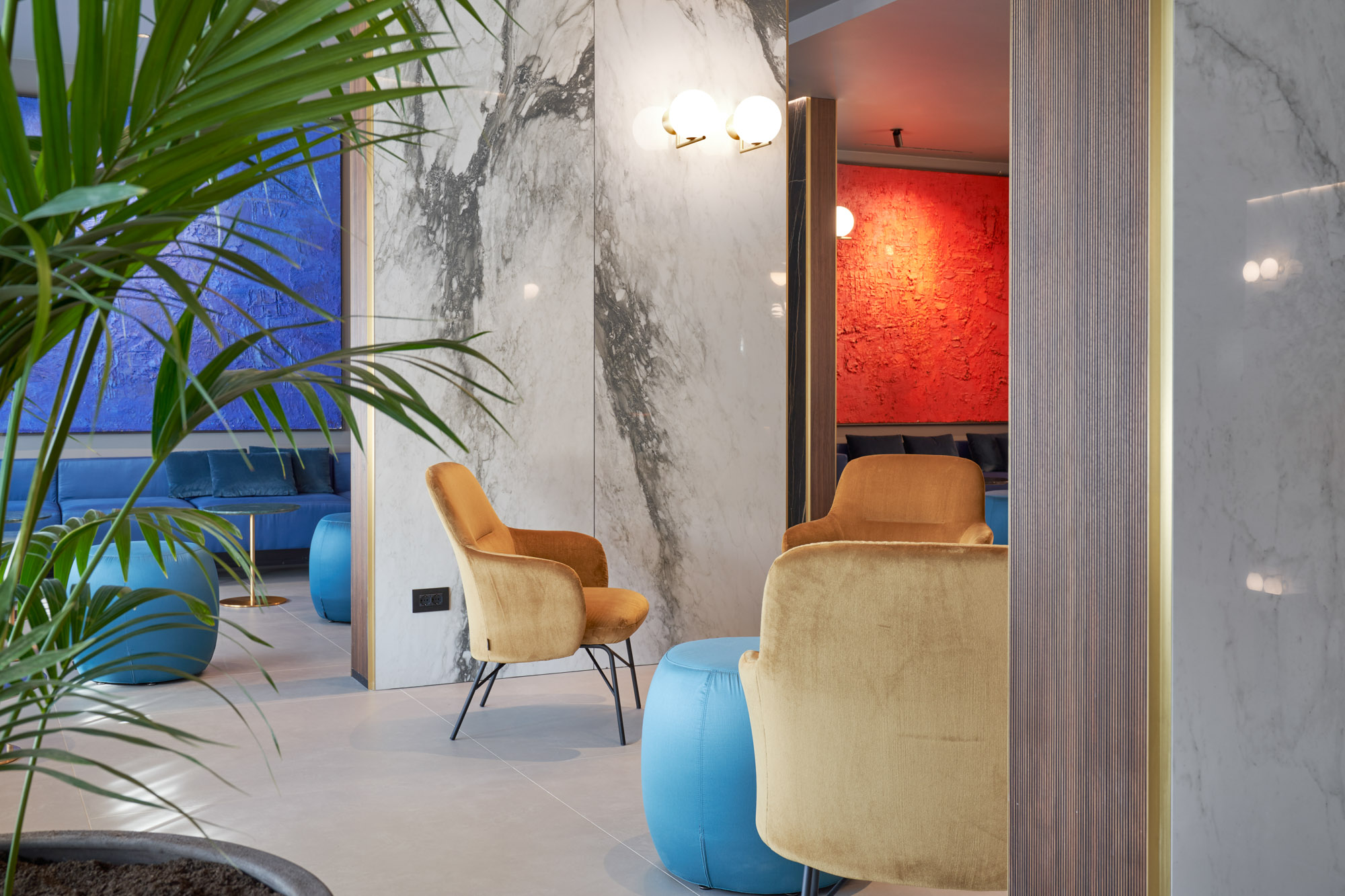
Colors, textures, material effects and large-format slabs make it possible to reproduce or reinterpret stone, marble, concrete, wood and many other materials. Design research has therefore become an integral part of the district’s competitiveness.
From Fiorano and the Sassuolo area, ceramic products are exported for use in residential projects, commercial spaces, hotels and public environments across numerous international markets, helping to spread Made in Italy ceramic design around the world.
Fiorano Between the Ceramic Valley and the Motor Valley
Fiorano Modenese also has a distinctive feature: it lies at the point where two of Emilia-Romagna’s most important manufacturing identities meet.
On one side is the Ceramic Valley, with the Sassuolo district; on the other is the Motor Valley, with Maranello and the world of Ferrari just a short distance away. The name Fiorano itself is also well known among motorsport enthusiasts thanks to Ferrari’s private test track.
Ceramics and automotive engineering may belong to very different industries, but they share several features that characterize the area: technical specialization, research, design, craftsmanship and an international outlook.
Discovering Fiorano Modenese Through Its Ceramics
Getting to know Fiorano means going beyond the image of a simple industrial town. Ceramics have accompanied the transformation of the area and continue to be an integral part of its identity.
For anyone staying in Fiorano Modenese, its location also provides an ideal starting point for exploring the Sassuolo district, the companies of the Ceramic Valley and, just a few kilometers away, Maranello and the attractions of the Motor Valley.
It is precisely this proximity between different manufacturing worlds that makes Fiorano so distinctive: a place where industry, innovation and Emilia-Romagna’s culture of craftsmanship and know-how have coexisted for generations.