

Modena's Cuisine: 10 Traditional Specialties You Must Try at Least Once
Modena’s cuisine is one of Emilia-Romagna’s most treasured culinary traditions, built on recipes passed down through generations, high-quality ingredients, and authentic flavours. From fresh homemade pasta and cured meats to traditional desserts, Modena offers a gastronomic journey that reflects the history and identity of the region.
Located in the heart of Emilia-Romagna’s Food Valley, the province of Modena is home to internationally renowned specialties and traditional dishes deeply rooted in local culture. Let’s discover ten typical dishes and products you should try at least once to experience the authentic flavours of Modena.
1. Tortellini in Broth: A Symbol of Modena’s Culinary Tradition
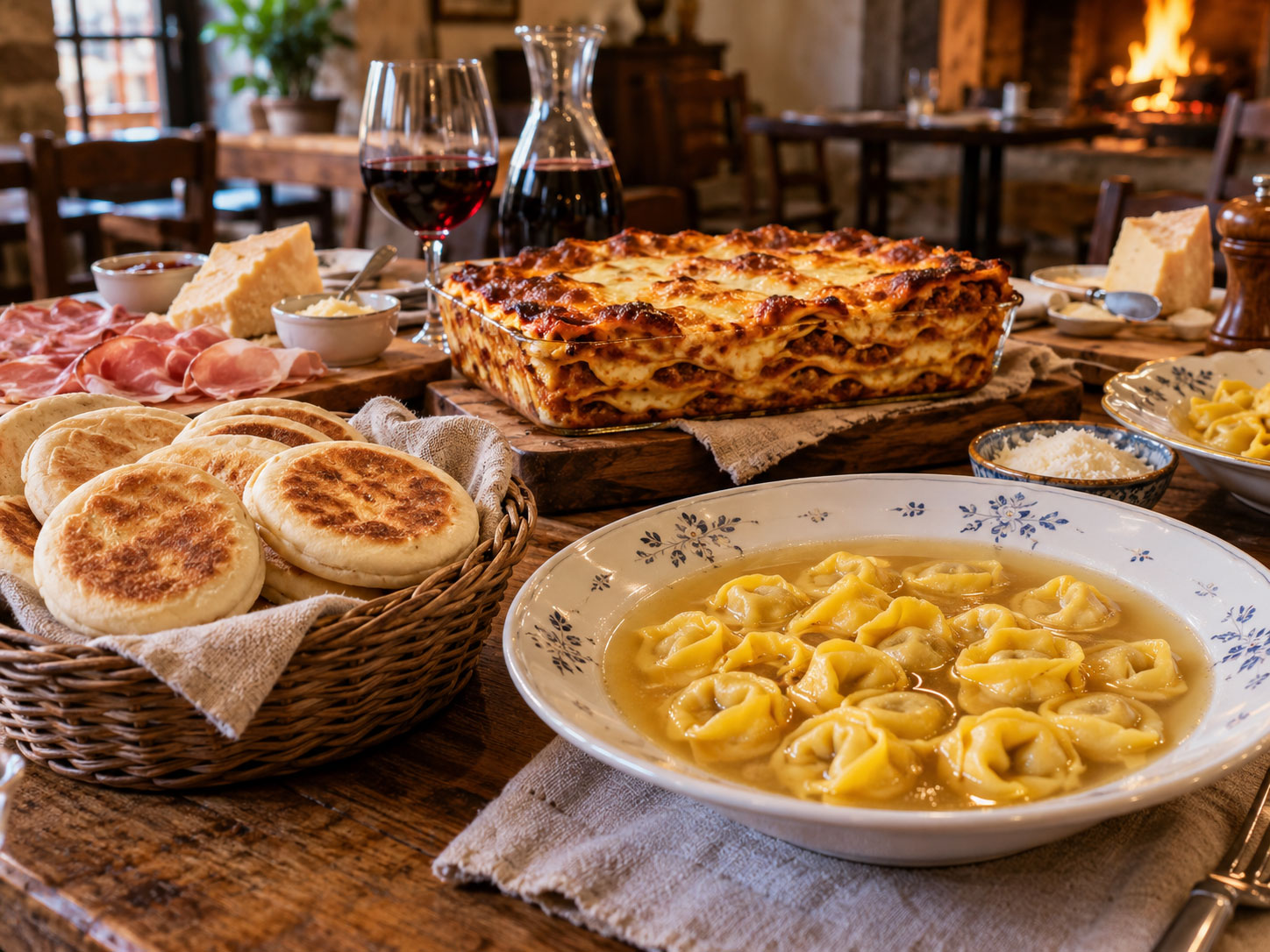
Tortellini in broth are among the most iconic dishes of Modena’s cuisine. These small parcels of fresh egg pasta contain a filling traditionally made with meat, Parmigiano Reggiano, and nutmeg, following recipes that may vary from one family to another.
Served in a hot, flavourful meat broth, tortellini are a highlight of festive meals, especially at Christmas. Their preparation requires skill and patience, from rolling out the pasta dough into thin sheets to carefully shaping each tortellino by hand. This dish perfectly represents the connection between gastronomy and family traditions.
2. Gnocco Fritto: A Traditional Specialty Served with Cured Meats
Gnocco fritto from Modena is one of the area’s most beloved specialties. It consists of a dough made with flour, water or milk, and fat, cut into rectangular or diamond-shaped pieces and deep-fried until golden, light, and puffy.
Traditionally served hot, gnocco fritto is accompanied by cured meats such as prosciutto crudo, salami, and coppa, often alongside fresh cheeses. It is an ideal choice for an appetiser, an informal lunch, or a convivial dinner. Its simplicity makes it one of the most authentic symbols of local cuisine.
3. Tigelle or Crescentine: The Taste of Modenese Hospitality
Tigelle, more accurately known as crescentine in the local tradition, are small, round flatbreads cooked and filled with typical local ingredients. The name tigelle originally referred to the traditional clay discs used for cooking them, although today it is commonly used to describe the flatbreads themselves.
Soft on the inside and slightly crispy on the outside, they are served with cured meats, cheeses, and traditional pesto modenese, a mixture of finely chopped pork lard, garlic, and rosemary, often topped with Parmigiano Reggiano. Crescentine are the perfect example of convivial dining, ideal for sharing around the table.
4. Zampone di Modena: A Festive Culinary Tradition
Zampone Modena PGI is one of the most distinctive products of the local gastronomic tradition. Made from a mixture of pork meat and rind, stuffed into the skin of a pig’s front trotter, it is a specialty deeply connected to Emilia-Romagna’s culinary heritage.
Usually served with lentils, mashed potatoes, or other vegetables, zampone is particularly popular during Christmas and New Year’s celebrations. Its origins are traditionally linked to the town of Mirandola and the events surrounding the siege of 1510–1511, a story that adds to the cultural significance of this historic product.
5. Traditional Balsamic Vinegar of Modena: The Region’s Black Gold
Traditional Balsamic Vinegar of Modena PDO is one of the province’s most prestigious gastronomic products. Made from cooked grape must and subjected to a lengthy maturation and ageing process in sets of small wooden barrels made from different types of wood, it represents a unique production tradition.
It is aged for at least 12 years, while the Extravecchio (Extra Old) version requires a minimum of 25 years. Thick, aromatic, and characterised by a delicate balance of sweetness and acidity, it is used in small quantities to enhance Parmigiano Reggiano, risottos, meat dishes, and even certain desserts. It is important to distinguish it from Balsamic Vinegar of Modena PGI, which follows different production regulations.
6. Cotechino Modena: A Classic of Emilian Cuisine
Cotechino Modena PGI is another essential specialty of the local culinary tradition. It is prepared using a mixture of pork meat, fat, and rind, seasoned with spices and stuffed into a sausage casing.
Compared to zampone, the main difference lies in the type of casing used. Once cooked, cotechino is sliced and served with lentils, mashed potatoes, or vegetable side dishes. Although particularly associated with winter celebrations, it is a traditional specialty worth discovering throughout the year, especially in local trattorias that preserve authentic regional recipes.
7. Lasagne Verdi alla Bolognese: A Classic of Emilian Family Dining
Lasagne verdi alla bolognese, also commonly enjoyed in Modena, are among the most popular dishes in Emilian culinary tradition. They are prepared by layering thin sheets of fresh green pasta, usually coloured with spinach, with meat ragù, béchamel sauce, and Parmigiano Reggiano.
Baking creates a lightly golden surface and a soft, rich, flavourful interior. Often served during Sunday lunches and special occasions, lasagne represent the warmth of traditional family gatherings. Although historically associated with Bologna, this dish is also part of the shared gastronomic heritage of Emilia.
8. Borlenghi: A Crispy Specialty from the Modenese Apennines
Borlenghi are a traditional specialty from the Modenese Apennines, particularly popular around Guiglia, Zocca, and the surrounding areas. They are extremely thin, crepe-like sheets made from a liquid batter and cooked on a special hot plate.
Once ready, they are seasoned with traditional cunza, a mixture of pork lard, garlic, and rosemary, often enriched with grated Parmigiano Reggiano. Folded and eaten hot, borlenghi have a crispy texture and a rich, distinctive flavour. They are a testament to traditional mountain cooking, based on simple ingredients and the ability to transform them into delicious dishes.
9. Torta Barozzi: Vignola’s Historic Chocolate Cake
Torta Barozzi is one of the most famous desserts in the province of Modena. Created in Vignola at the end of the 19th century by pastry chef Eugenio Gollini, it takes its name from the architect Jacopo Barozzi, also known as Vignola.
Characterised by intense chocolate and coffee flavours and a soft, dense texture, it is made according to an original recipe carefully preserved by the Gollini family. Its distinctive character comes from the balance of ingredients and the depth of its flavour. It is an ideal dessert to enjoy at the end of a meal or alongside a cup of coffee.
10. Lambrusco di Modena: The Wine That Symbolises Local Tradition
No journey through Modena’s gastronomy would be complete without tasting Lambrusco, the wine most closely associated with local cuisine. Produced in several styles and appellations, including Lambrusco di Sorbara DOC, Lambrusco Grasparossa di Castelvetro DOC, and Lambrusco Salamino di Santa Croce DOC, it is one of the region’s most celebrated wines.
Its characteristics vary depending on the grape variety and production area, offering fresh, fruity, delicate, or more full-bodied expressions. Thanks to its versatility, Lambrusco pairs beautifully with gnocco fritto, crescentine, cured meats, and the rich traditional dishes of Modena.
Modena’s Cuisine: A Journey Through Tradition and Authentic Flavours
From handmade tortellini to the crispy borlenghi of the Apennines, from Traditional Balsamic Vinegar to historic local desserts, Modena’s cuisine tells the story of a region where food is an essential part of local culture and identity.
Tasting these ten specialties means discovering not only exceptional recipes and products but also the stories, traditions, and places that make Modena one of the most fascinating gastronomic destinations in Italy’s Food Valley.